It's important for my students to understand how the body moves through the swing. Sometimes this requires me to explain a particular movement in a more technical way. I've listed below some of the more common movement patterns in the golf swing.
A better understanding here will help the golfer to focus on a movement which requires attention. Understanding the appropriate movement greatly enhances the communication between player and coach. It allows us to speak the same language.
Bevan KiddNZPGA Teaching Professional
The 10 swing positions
The P-system.
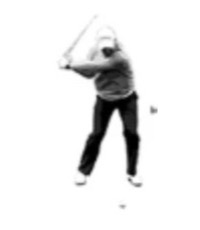
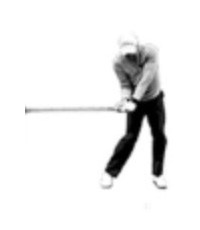
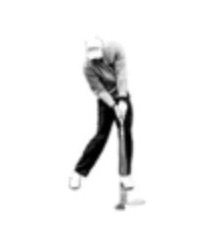
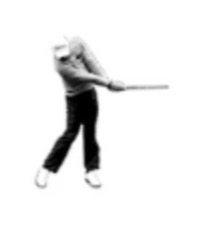
One of the most influential instructors in the history of the game was American tour player Mac O'Grady. In 1984, to help his students better understand the golf swing, he categorised the swing into 10 different positions. When working on the nuances of the swing it's really helpful for students and coach to be able to understand these positions. Below is a breakdown of Positions 1–10.
P1
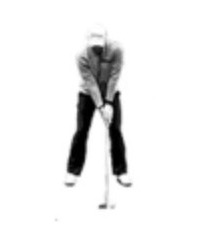
P1 · Setup
The setup position with the club on the ground behind the ball.
P2
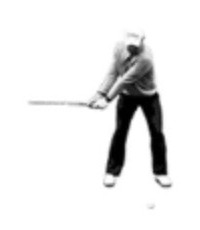
P2 · Takeaway
The takeaway phase when the club shaft is parallel to the ground.
P3
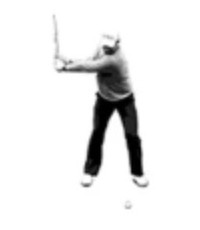
P3 · Lead arm parallel
The point when your lead arm is parallel to the ground.
P4
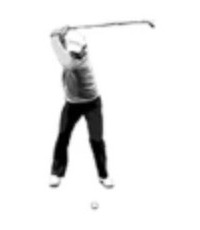
P4 · Top of the backswing
The highest point of the backswing where rotation completes.
P5
P5 · Transition
The transition phase when your lead arm is parallel to the ground again on the way down.
P6
P6 · Shaft parallel
When the club shaft is parallel to the ground during the downswing.
P7
P7 · Impact
The moment of truth when the club strikes the ball.
P8
P8 · Post-impact
The post-impact position when the club shaft is once again parallel to the ground.
P9
P9 · Trail arm parallel
When your trail arm is parallel to the ground, mirroring P3.
P10
P10 · Finish
The final balanced position with the body fully rotated and the club resting over or around the shoulder.
A better understanding of these can help a student to greatly improve the movement or area which requires attention. The following terms may come up in our lessons.
01
The wrists and forearms
6 terms
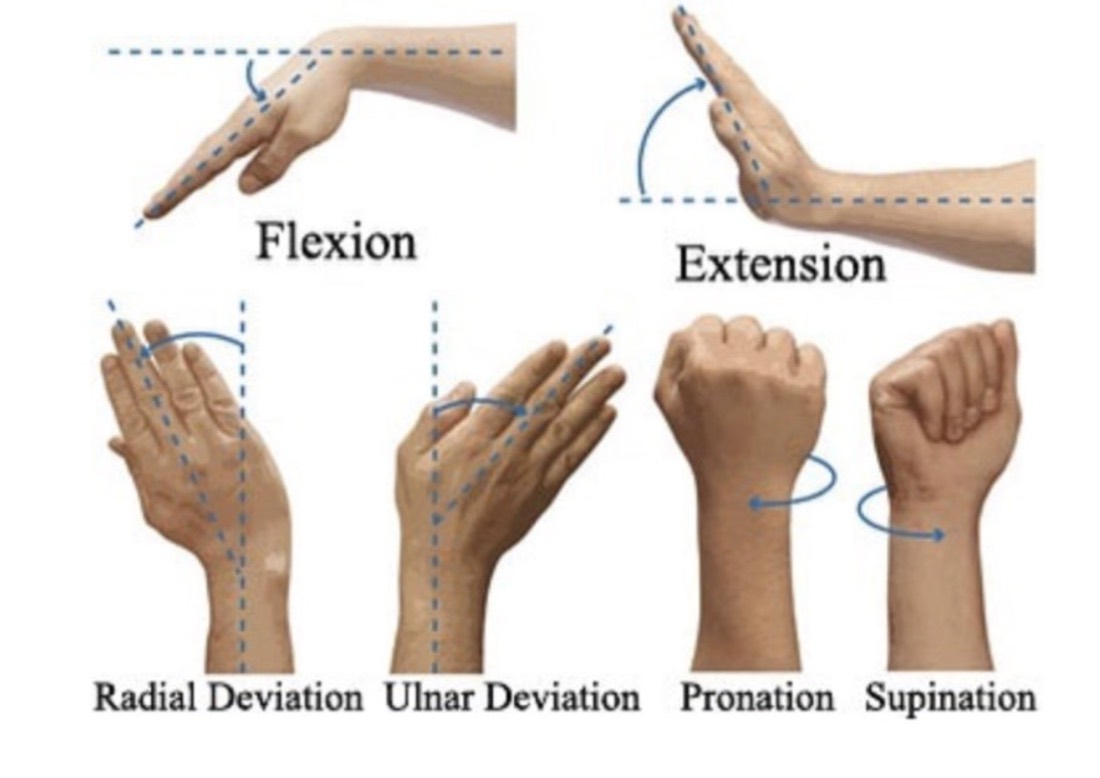
Flexion and extension, radial and ulnar deviation, pronation and supination.Tap to open full size
Radial deviation of the wrist
Hinging the club up.
Ulnar deviation of the wrist
Hinging the club down.
Extension of the wrist
The lead wrist hinging towards the target, or the trail wrist hinging back away from the target.
Flexion of the wrist
The lead wrist hinging away from the target, or the trail wrist hinging towards the target.
Supination of the forearm
Turns the forearm so the palm faces up — think of holding a bowl of soup.
Pronation of the forearm
Turns the forearm so the palm faces down — think of pressing your hand flat on a table.
02
Wrist flexion and extension
4 terms
Lead wrist flexion (bowing)
Closes the clubface and reduces loft.
Lead wrist extension (cupping)
Opens the clubface and increases loft.
Trail wrist flexion on the downswing
Increases loft and promotes a higher ball flight.
Trail wrist extension on the downswing
Decreases loft and promotes a lower ball flight.
03
The body
8 terms
Body flexion and extension
The amount of forward bend from the hips increases the amount of flexion or extension in the body. A taller, more extended state at address is desirable, and a more angular, lower flexed state is more desirable approaching impact.
Internal and external shoulder rotation
Controls the club's path. I focus primarily on the lead shoulder on the forward swing. Internal rotation of the lead shoulder shallows the club's path, and external rotation of the lead shoulder steepens the club. The trail shoulder must transition into external rotation to shallow the club — if it moves towards internal rotation, that has the undesired effect of steepening the club.
Anterior space
In front of the body.
Posterior space
Behind the body.
Lead arm abduction in the forward swing
Moving the lead arm away from your body's midline.
Trail arm adduction in the forward swing
Bringing the trail arm closer to the midline of your body.
Proximal and distal
Proximal means closer to the centre of the body, or the point where a limb attaches. Distal means farther away from that point.
Pelvic drop
A downward vertical movement of the hips during the early transition and downswing that helps load ground traction forces.
04
The shoulder blades
4 terms
Scapular retraction
Pulling the shoulder blades back and closer to your spine, using upper back muscles like the rhomboids.
Scapular protraction
Pushing or sliding the shoulder blades forward and away from the spine as the chest rounds.
Scapular depression
Keeping the shoulders pushed down away from your ears, to maintain posture.
Scapular elevation
The upward shrugging or lifting of the shoulder blades towards the ears.
05
The planes of movement
3 terms
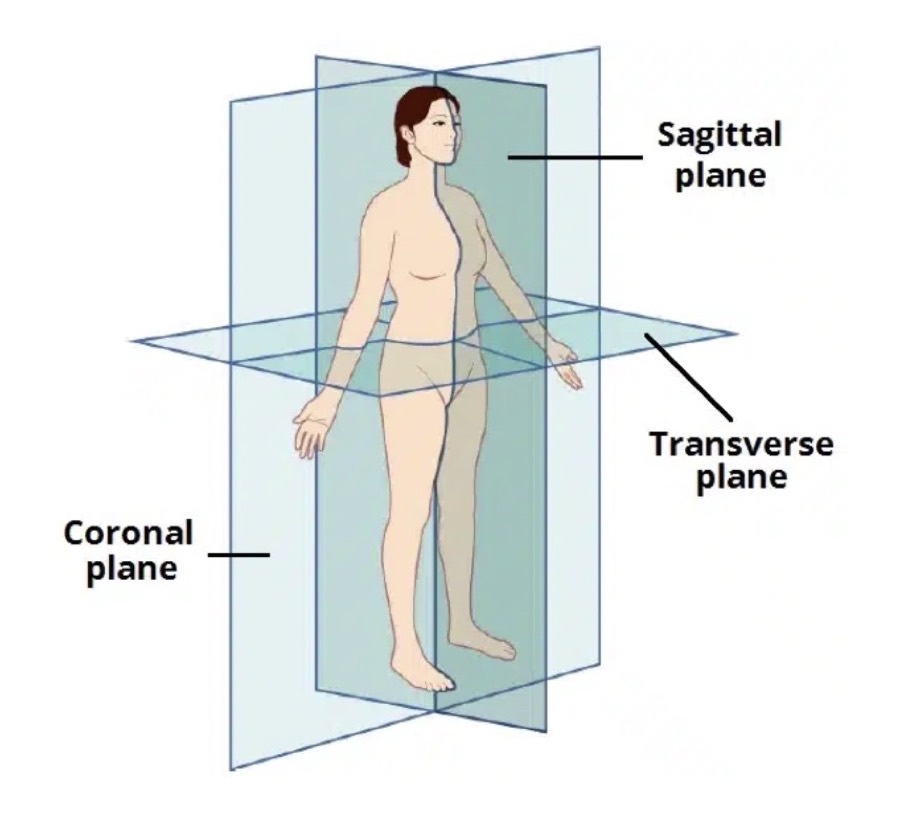
The three planes the body moves in.Tap to open full size
Sagittal plane
Coronal plane
Transverse plane
06
The golf club
2 terms
Hub of the golf club
In the middle of the grip.
Centre of mass of the golf club
The balance point of the club, near the bottom of the shaft.
07
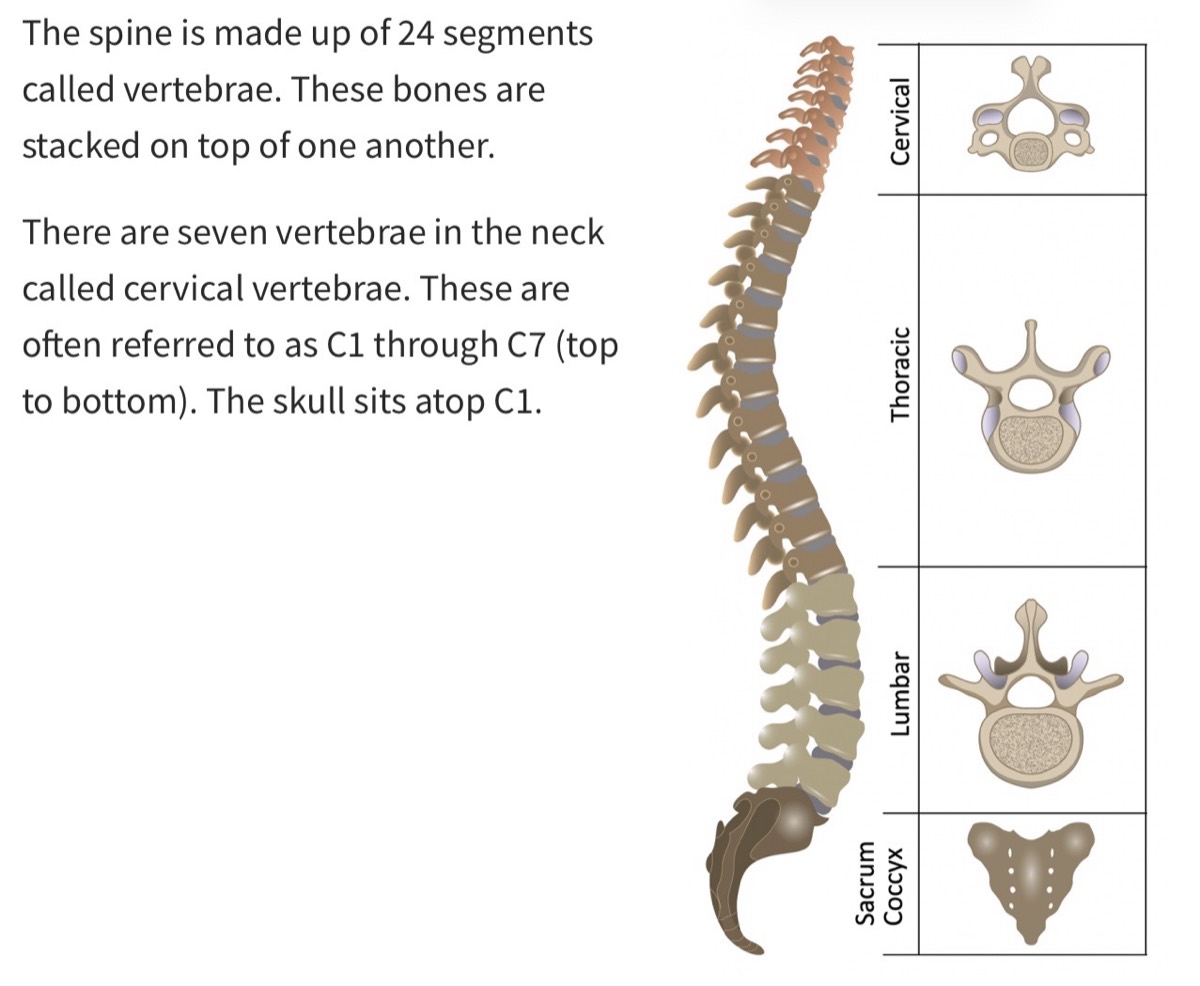
The spine
4 terms
The four regions, top to bottom.Tap to open full size